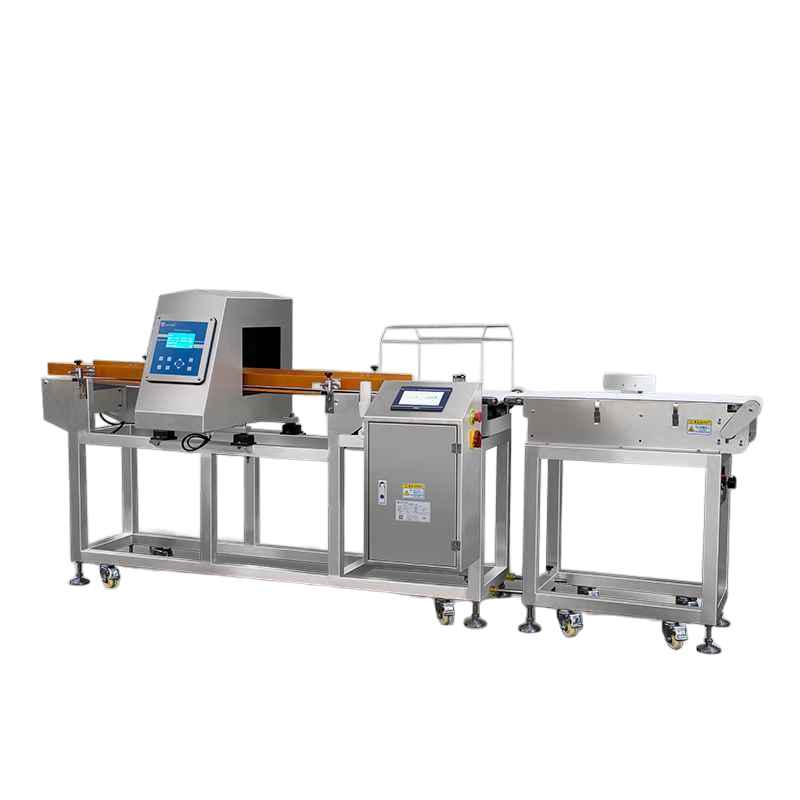
Bulk food inspection is not simply packaged-product testing without the package. Loose vegetables, seafood, pickled products, and other ingredients move through shared handling stages in irregular shapes and varying moisture levels. A food metal detector for these applications must handle continuous product flow, variable density, and conductive substances that can mask metal signals. Foodman Vision approaches bulk inspection through configurable hardware and application-specific calibration, supported by OEM/ODM and B2B service programs.
How Bulk Food Flow Affects Metal Detection
In packaged applications, each item passes through the aperture in a fixed shape and orientation. Bulk products behave differently. Vegetables may arrive in mixed sizes, seafood can clump together, and pickled products often carry brine that changes the electrical background. These conditions create a fluctuating signal that a Food metal detector must interpret without generating excessive false rejects.
Product depth also matters. A thin, even layer allows consistent detection, while an uneven or overly thick layer can reduce sensitivity. Controlling the feed rate and distribution before the inspection zone is therefore part of system design, not just an operational detail.
In practice, many bulk lines use a spreader, vibratory feeder, or leveling roller before the detector to create a more uniform layer. Without this step, product clumps may pass through the aperture as a thick mass, and small metal fragments inside can be masked by the surrounding food. A short trial with the actual product often reveals whether the existing feed system is suitable or needs adjustment.
Understanding Product Effect in Loose Ingredients
High-moisture and high-salt foods generate their own electromagnetic response, commonly called product effect. Seafood, pickled vegetables, and fresh produce can produce signals that overlap with the signals from small metal fragments. A Food metal detector must distinguish between the product itself and a genuine contaminant, which requires calibration with the actual food rather than a factory default.
Product effect changes with temperature, recipe, and season. A batch of pickles with higher salt content may behave differently from a lower-salt batch. For bulk processors, this means inspection settings should be verified whenever raw materials or processing conditions change, not only at initial installation.
Frozen products introduce an additional variable. As the product temperature changes during processing, its electrical properties may shift, so a setting that works for freshly chilled seafood may not perform the same way on a partially frozen batch. Recording the product state during calibration helps avoid unexpected false rejects later in the shift.
Configuring Aperture and Conveyor for Bulk Applications
Bulk products often require a larger aperture and a wider conveyor than packaged goods. The aperture must accommodate the product flow without excessive empty space, because a larger opening can reduce sensitivity. Foodman Vision can customize aperture dimensions, conveyor width, and belt material to match a specific bulk line.
Reject mechanisms also differ. A pusher or air blast may suit one product, while a flap or drop-out section works better for another. Sticky or wet products may need a different reject method than dry, free-flowing ingredients. These choices affect both detection reliability and product waste.
Conveyor belt material can also influence performance. Some belts accumulate moisture or product residue, which changes the background signal over time. Belt tension, tracking, and cleanliness should be checked regularly, particularly on lines handling brine or oily products. A poorly maintained belt can cause drifting signals that look like contamination but are not.
Integrating Detection into Existing Bulk Processing Lines
Placement matters. Bulk inspection often takes place after cutting, washing, or sorting, but before mixing, portioning, or filling. Detecting metal early prevents fragments from spreading into downstream equipment and simplifies source tracing. The detector must match the line’s conveyor height, speed, and control signals.
The FMD-300 combines metal detection and checkweighing in one unit. Its stated applications include seafood, pickled products, and vegetables. For bulk lines with limited floor space, combining two quality checks in one footprint can simplify layout and reduce handling between stations. Foodman Vision can adapt the combined unit to different rejection and data-output requirements.
Signal wiring and grounding deserve attention during integration. Variable-frequency drives, nearby motors, and other electrical equipment can introduce interference that affects detection stability. Keeping signal cables separated from power lines and verifying grounding at the installation site helps reduce these issues before they affect production.
OEM/ODM Customization and B2B Service
Foodman Vision offers OEM and ODM services for bulk food inspection. Customization can cover aperture size, conveyor type, reject mechanism, control interface, and product presets. For B2B customers, sample testing before purchase helps confirm detection performance with real products under realistic line conditions.
After installation, Foodman Vision provides technical support, spare parts, and operator training. For processors running multiple bulk products, the system can store separate calibration settings and switch between them quickly. This reduces changeover time and helps maintain consistent detection across different batches.
Conclusion
Bulk food metal detection depends on product flow, moisture, salt content, and line configuration. A Food metal detector that works well for packaged goods may not perform reliably on loose vegetables or brined seafood. Foodman Vision addresses these variables through customizable hardware, application-specific calibration, and B2B service support. The goal is not simply to install a detector, but to build an inspection setup that fits the actual production environment and keeps working as products and conditions change.