The question is no longer simply whether equipment is made in China. For dentists, distributors, and clinic groups, the more useful question is whether a particular manufacturer can deliver the required clinical configuration, manufacturing consistency, documentation, and support. That shift has changed how China dental equipment is evaluated in international markets.
Chinese manufacturers now compete on more than production cost. Manufacturing scale, product development, digital production systems, customization, and overseas service can all influence a purchasing decision. The difference, however, lies in the capabilities of the individual supplier rather than the country label alone.
The Decision Has Shifted From Country to Manufacturer
A buyer comparing China dental equipment should begin with the manufacturer behind the product. Country of origin provides useful context, but it cannot establish whether a specific dental unit is appropriate for a clinic or distribution network.
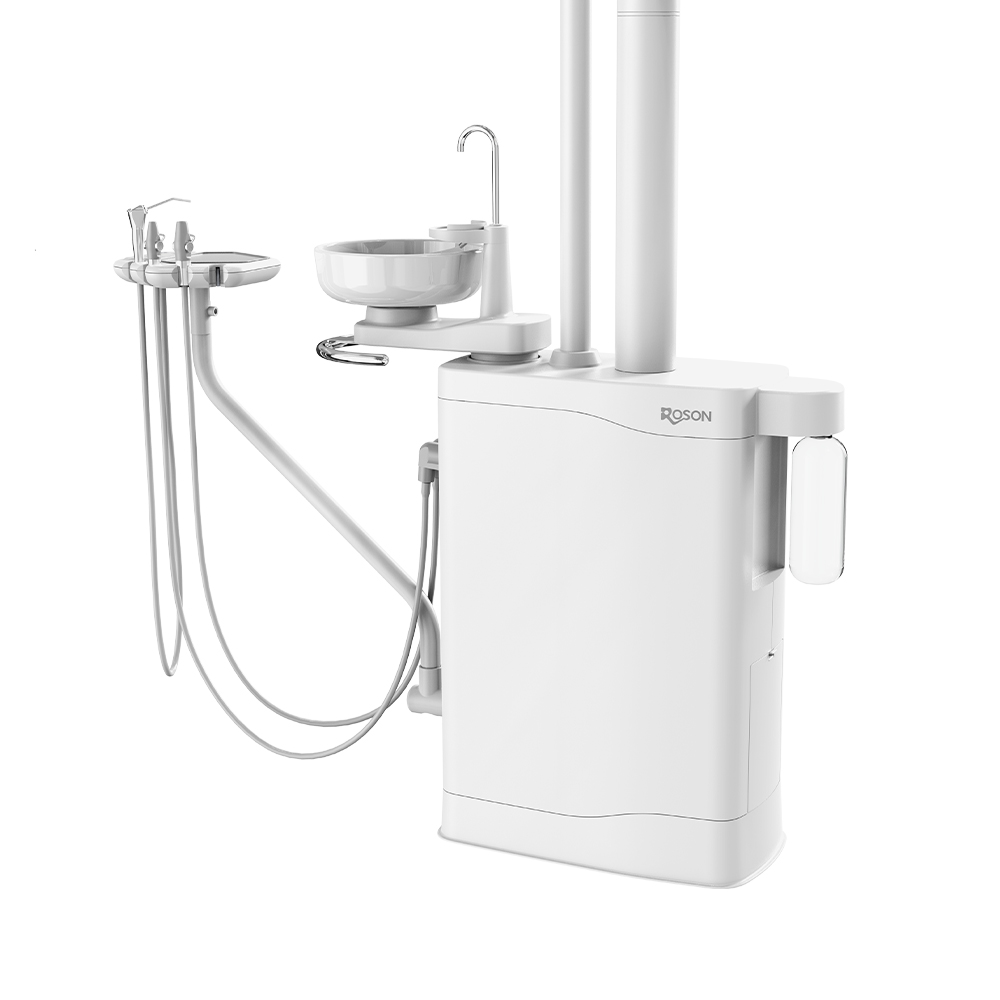
Product range is one practical indicator. A manufacturer that develops dental chairs alongside compressors, stools, lights, handpieces, autoclaves, imaging equipment, and other accessories may be able to address more of a clinic’s equipment requirements through one supply relationship. Roson, for example, presents a portfolio covering dental units and several categories of supporting equipment.
Manufacturing Scale Can Support Broader Product Selection
Large-scale production can affect how consistently a manufacturer handles repeat orders. It can also matter to distributors that need the same configuration across multiple markets or clinic projects.
The manufacturer states that its digital production base uses paperless production management and quality traceability, while its current site reports output of more than 1,000 dental units per month. These are manufacturer-reported capabilities, so buyers should still verify the processes relevant to their own order.
Production scale alone does not prove product quality. Its value becomes clearer when supported by documented processes, component control, testing, and traceability.
Product Development Is Becoming More Practice-Focused
Modern dental units are not simply mechanical patient chairs. Their design affects instrument access, clinician positioning, patient positioning, controls, lighting, and integration of treatment functions.
The manufacturer reports dedicated R&D activities, experienced engineering personnel, product testing facilities, and more than 30 national invention and utility-model patents. Such information gives buyers something concrete to investigate when assessing the engineering depth behind China dental equipment rather than judging products only by exterior appearance.
The relevant question for a buyer is therefore practical: does the development process produce configurations that suit the intended clinical workflow?
Traceability Matters Beyond the Factory Floor
A sophisticated manufacturing system becomes more valuable when buyers can connect finished products to identifiable production and quality processes. Traceability can support investigation when a component, assembly, or configuration requires attention.
Roson describes a manufacturing system supported by MES-based digital management and comprehensive traceability. It also identifies self-developed key components as part of its production approach. These claims should be assessed through supplier documentation and quality records during procurement.
For distributors, this type of information can be particularly relevant when establishing a repeatable supply chain rather than making a single equipment purchase.
One Supplier Can Simplify Equipment Sourcing
Dental clinics rarely purchase only a chair. Treatment rooms can require supporting equipment such as dental lights, stools, compressors, handpieces, sterilization equipment, and imaging-related products.
A broad dental equipment supplier can reduce the number of separate supplier relationships involved in a project. Roson’s portfolio includes dental chairs, compressors, stools, lights, handpieces, autoclaves, intraoral cameras, curing lights, and other dental equipment categories.
That does not mean every buyer should source everything from one company. Instead, a broader portfolio gives procurement teams the option to evaluate whether consolidated sourcing would simplify configuration, communication, shipping, or technical support.
Customization Makes Equipment Easier to Match to Different Markets
Dental practices and distributors do not necessarily require identical configurations. Treatment workflows, room layouts, preferred delivery arrangements, accessory requirements, and market expectations can differ.
Chinese manufacturers with multiple configurations can therefore appeal to buyers seeking more flexibility. The referenced product portfolio includes customized dental-chair models alongside standard models, indicating that configuration can be part of the supplier discussion.
For a dental equipment supplier, customization can also matter when supporting different distributor markets. The important step is to establish exactly which options are genuinely available for the selected model rather than assuming every product can be modified.
International Support Reduces the Distance Problem
Buying overseas equipment creates a practical concern: what happens after delivery? Installation instructions, operation manuals, maintenance resources, troubleshooting guidance, and technical communication can affect the ownership experience.
The manufacturer reports online and offline training, issue-resolution support, on-site inspection, engineering assistance, and technical resources covering installation, operation, maintenance, and troubleshooting.
Its website also states that it serves partners in more than 100 countries. Buyers should independently confirm service availability, response arrangements, spare-parts procedures, and local responsibilities before signing a contract.
What Buyers Should Verify Before Choosing a Chinese Supplier
Interest in China dental equipment should ultimately lead to a supplier-level evaluation. Buyers should examine the exact model, configuration, manufacturing process, documentation, applicable regulatory requirements, warranty terms, spare-parts arrangements, and technical support.
A capable dental equipment supplier should be able to explain these points clearly instead of relying on a low quotation alone. Product samples, factory audits, technical documents, and pre-shipment inspection can provide additional evidence where appropriate.
Chinese manufacturing can offer a combination of product breadth, engineering development, scalable production, and international support. Roson illustrates how a manufacturer can build those capabilities into a broader B2B offering, but buyers should still verify each requirement against the specific product and market.
The strongest reason to consider Chinese equipment is not its origin by itself. It is the opportunity to source from manufacturers whose actual production, product development, customization, and support capabilities match the buyer’s operational requirements.