Communication networks rely on stable signal transmission to support data exchange between different devices and systems. As network structures continue to develop, magnetic components remain an important part of maintaining electrical performance and signal quality. In industrial applications, Mentech provides customized magnetic component solutions, including lan transformer products designed for communication-related requirements. Understanding how these components work helps engineers select suitable solutions for different network environments.
The Role of lan transformer in Network Equipment
A network transformer is a magnetic component commonly used in Ethernet and communication equipment. Its main functions include signal isolation, impedance matching, and reducing interference between circuits. These functions help communication systems maintain stable data transmission while improving electrical protection between connected devices.
In practical applications, network transformers are used in equipment such as switches, industrial communication devices, and other network hardware. Their design needs to consider factors including operating frequency, electrical isolation requirements, installation method, and compatibility with the target circuit.
Different applications may require different structural designs. Some projects focus on compact size and integration, while others require higher power handling capability or stronger environmental adaptability. Therefore, customized development is often considered when standard components cannot fully match system requirements.
Design Considerations for Network Magnetic Components
The design of a network transformer involves several technical aspects, including core material selection, winding structure, insulation design, and manufacturing process control. Magnetic performance directly affects signal transmission characteristics, so engineers usually evaluate parameters according to the requirements of the application environment.
The core structure plays an important role in determining magnetic efficiency and operating stability. Different core shapes provide different space arrangements and electrical characteristics, allowing manufacturers to develop components for specific equipment designs.
Mounting methods are another important consideration. DIP mounting remains common in many electronic assemblies because it provides a stable connection method for circuit boards. For communication equipment manufacturers, choosing a suitable mounting structure can help simplify production processes and improve compatibility with existing designs.
How Industrial Requirements Influence Component Selection
Industrial communication environments often require components that can operate under changing temperature conditions and long working periods. Engineers need to evaluate product specifications carefully, especially when equipment is installed in factories, outdoor cabinets, or other demanding locations.
Temperature range, insulation performance, and reliability testing are important references during component selection. Components used in automotive or industrial fields may require additional qualification standards to match stricter application conditions.
Mentech develops magnetic components for different industrial fields by combining design experience with application requirements. They provide products that cover communication, power, and new energy scenarios, allowing customers to select suitable magnetic solutions based on project specifications.
Application Example of TTAPQ53-1943DG
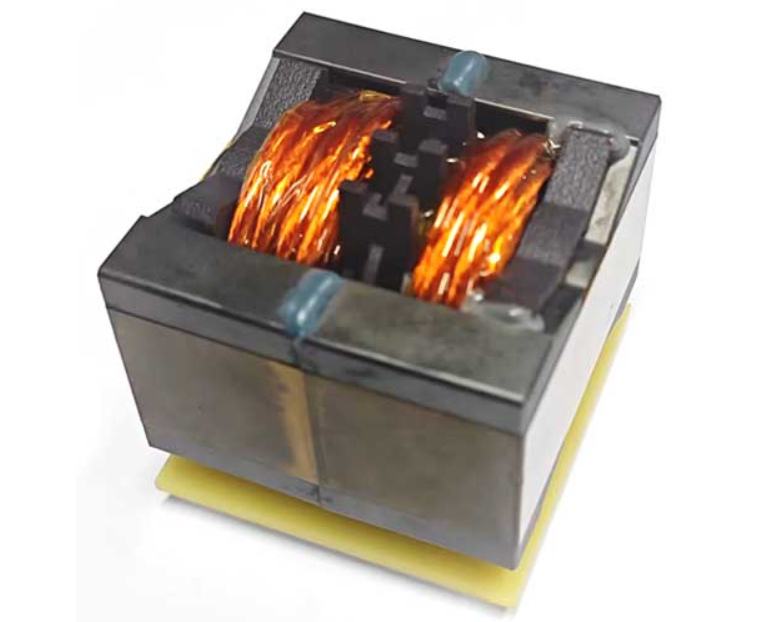
The TTAPQ53-1943DG is one example of a magnetic component designed for specific power and communication-related requirements. This product uses a PQ53 core type with DIP mounting structure. Its dimensions include a length of 53mm, width of 51mm, and height of 50mm.
The component adopts an LLC topology and supports a power rating of 3.3KW. These specifications make it suitable for applications that require structured power conversion designs and stable electrical performance. Engineers can review these parameters when evaluating whether the product matches their system architecture.
The TTAPQ53-1943DG also provides a primary-to-secondary Hi-Pot insulation rating of 3600V. In addition, it meets AEC-Q200 Grade1 requirements and supports an operating temperature range from -40℃ to 125℃. These characteristics are important references for projects involving automotive-grade or industrial environments.
The Relationship Between Customization and Application Needs
Electronic equipment manufacturers often face different design limitations, including available installation space, circuit layout, and performance targets. Standard components may not always meet these requirements, which creates demand for customized magnetic component development.
A customized approach allows engineers to adjust structural design, electrical parameters, and mechanical dimensions according to project needs. This process usually involves communication between component suppliers and equipment manufacturers to define technical requirements before production.
When selecting a supplier, customers generally consider development capability, manufacturing experience, quality management, and product consistency. A clear understanding of application conditions helps both sides create components that better fit the final equipment.
Conclusion: Selecting Suitable Magnetic Components for Communication Systems
Stable communication systems depend on carefully designed electronic components that support reliable signal transmission and electrical protection. A suitable lan transformer solution requires consideration of structure, mounting method, insulation performance, and operating environment. These factors can influence product compatibility and long-term performance in different electronic systems.
With experience in customized magnetic component development, Mentech supports industrial customers with solutions including network-related magnetic products and power application components. They offer products such as TTAPQ53-1943DG for projects requiring specific electrical specifications, helping customers evaluate magnetic solutions according to their technical requirements.
During product selection, engineers usually review parameters such as electrical characteristics, application conditions, and system integration requirements. By providing customized development support, Mentech helps customers explore suitable magnetic component designs for communication equipment and other electronic applications.